


Results and Analysis
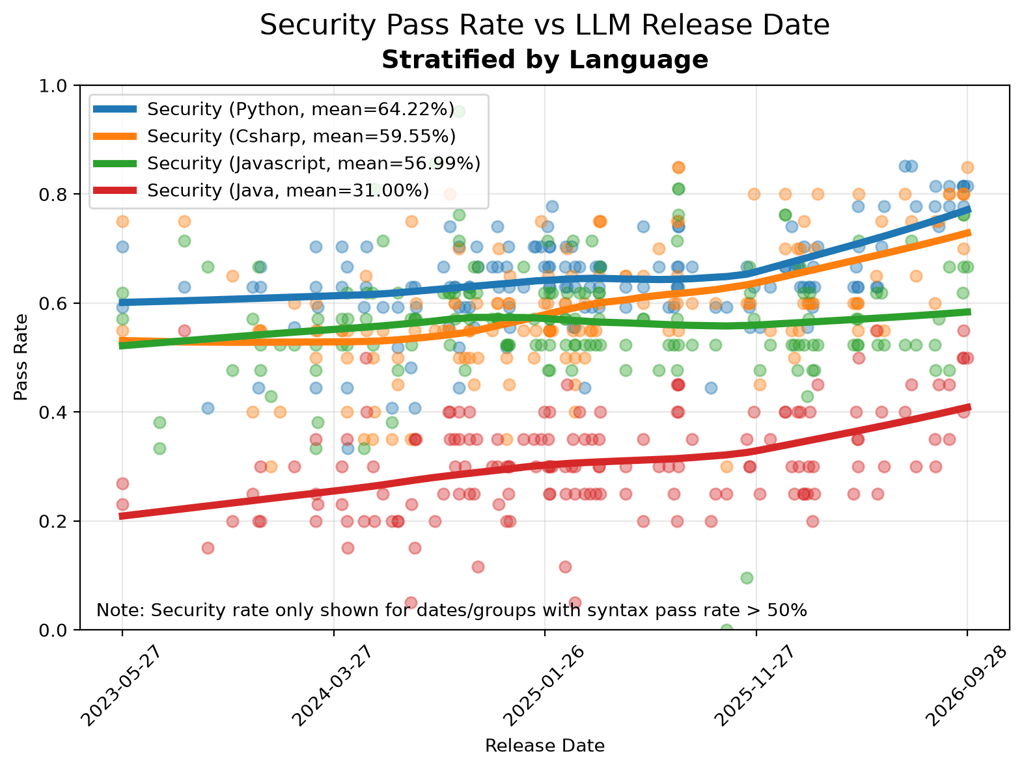
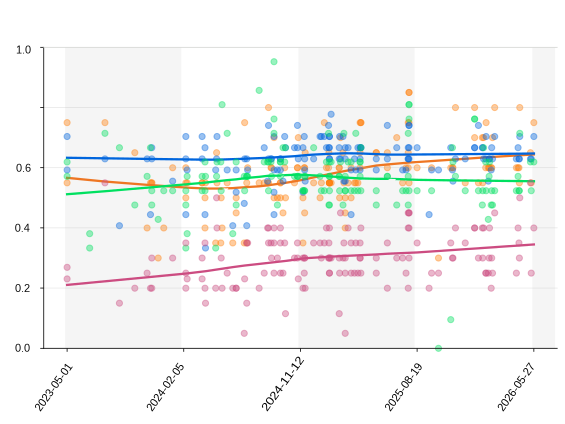
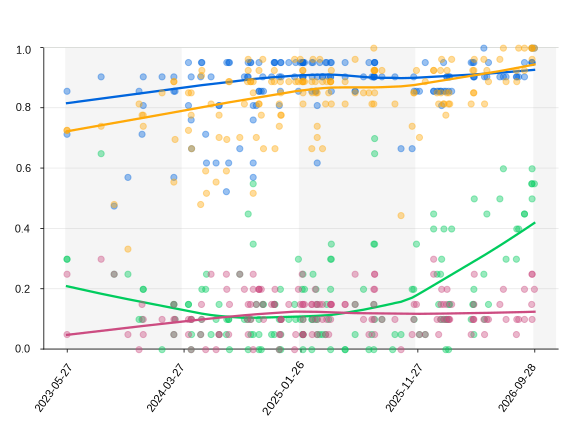
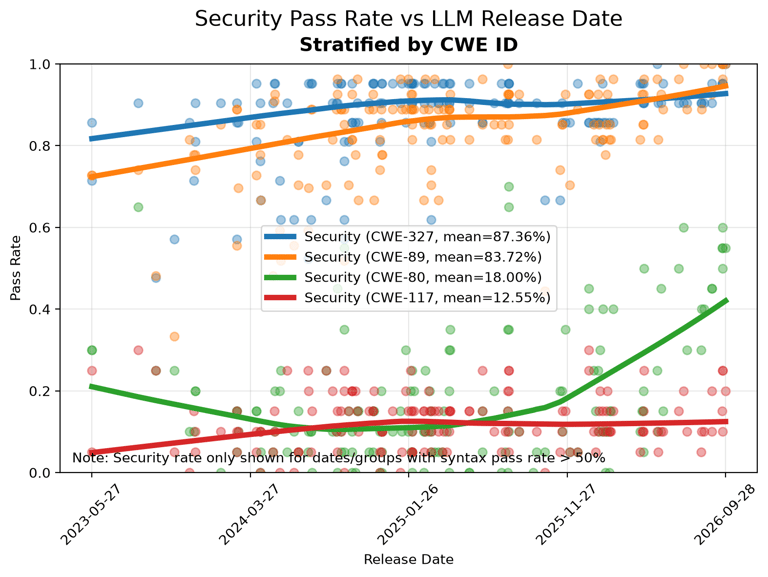
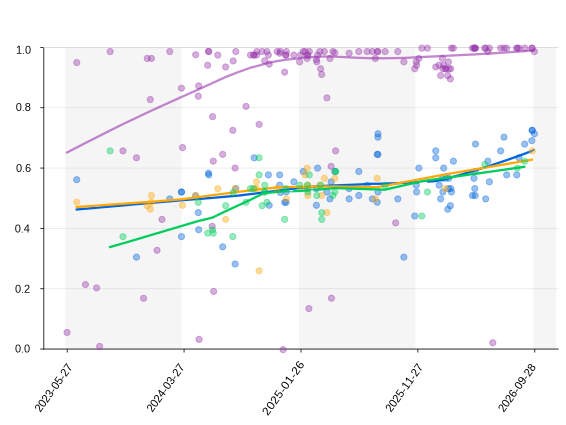
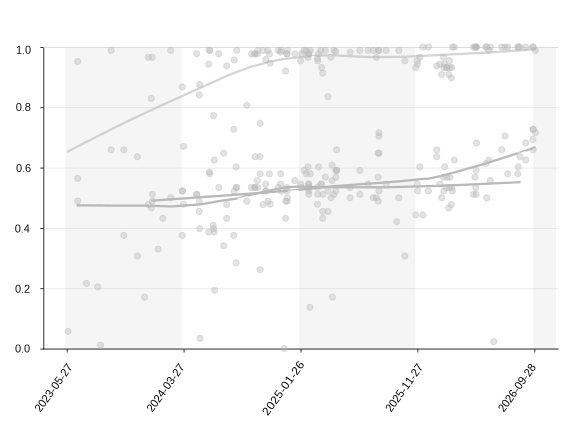
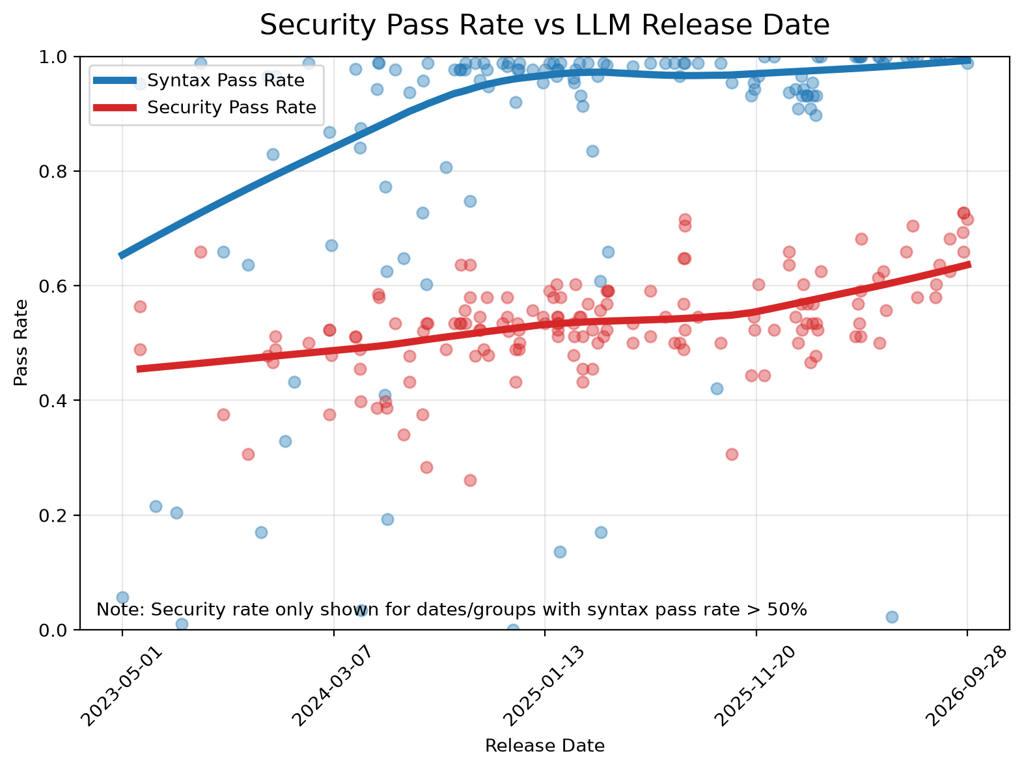
Overall, models have made enormous strides in their ability to generate syntactically correct code. Security is a different story. Across all languages, CWEs, tasks, and models, the average security pass rate sits at approximately 62% in Fall 2026, up from 56% last quarter and the first meaningful movement since we began tracking (55% in the first report). In roughly 38% of cases, these models still introduce a detectable OWASP Top 10 vulnerability into the code.
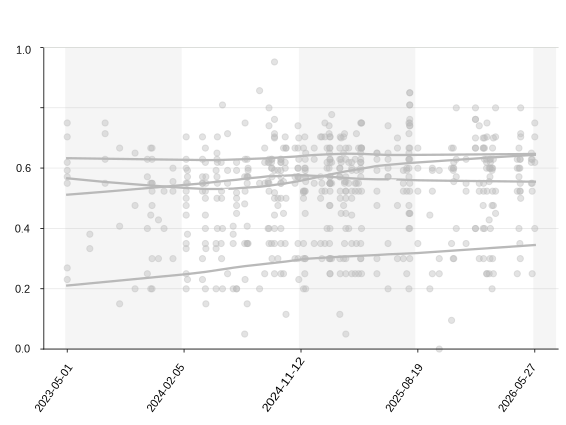
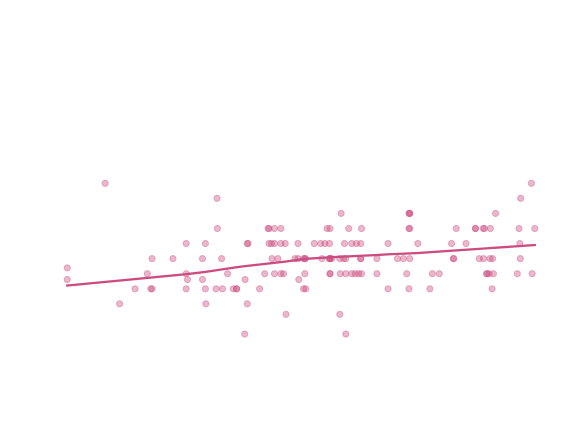
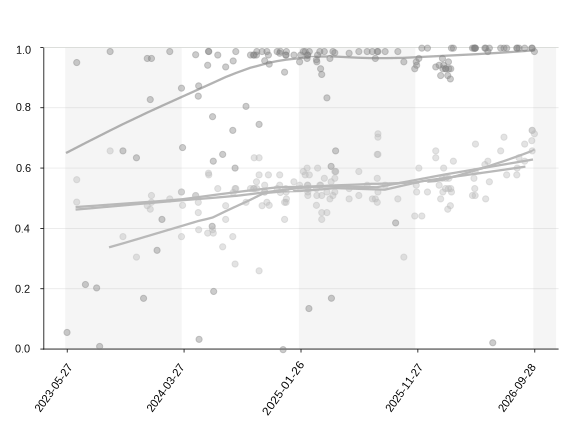
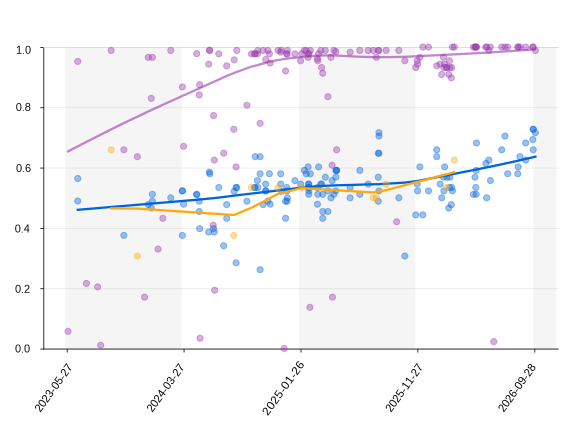
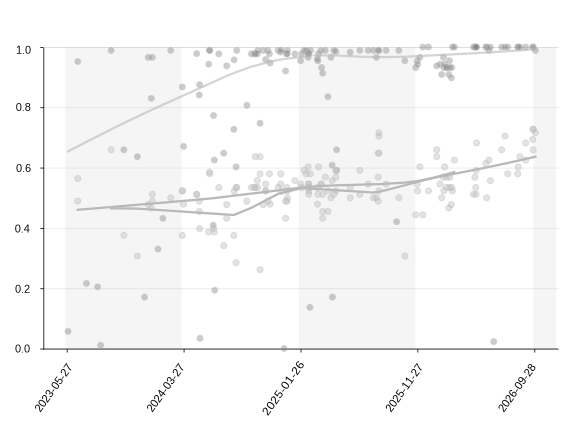
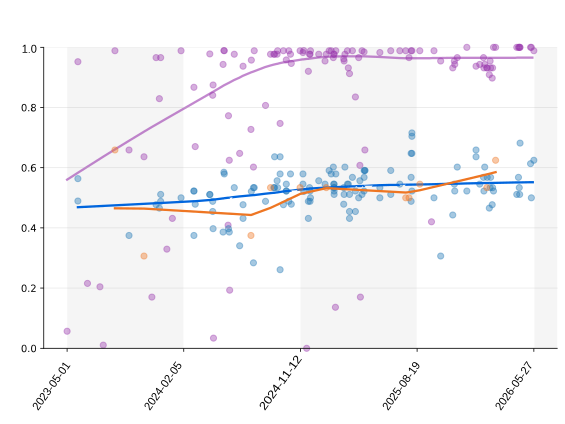
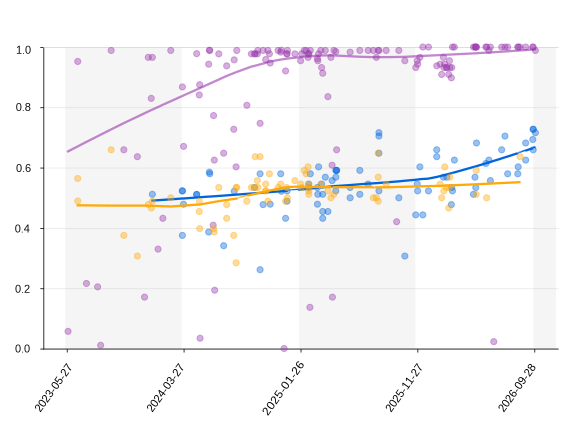
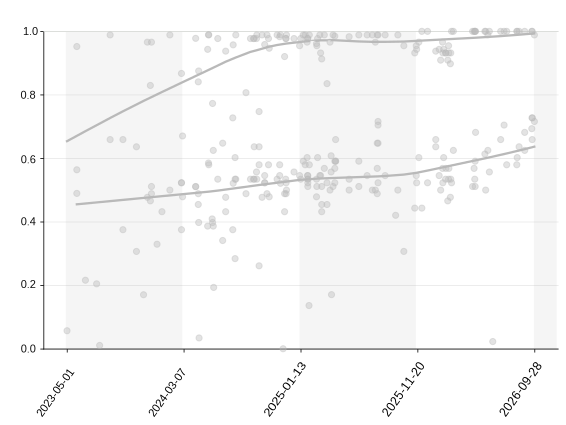
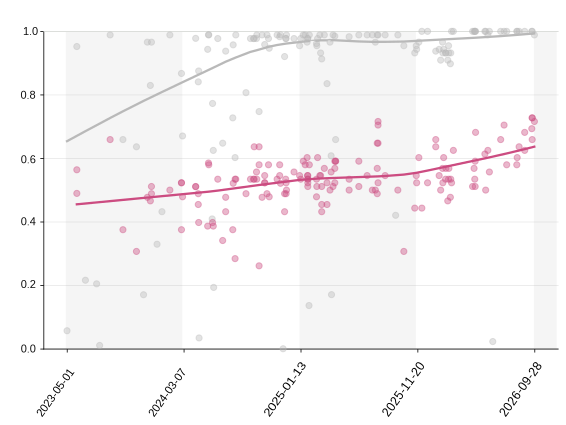
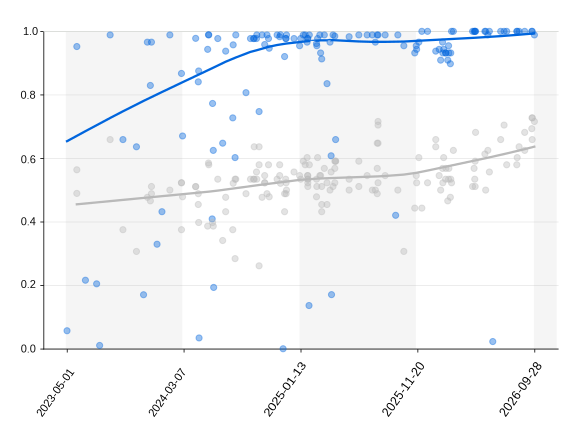
The graph below shows the overall syntactic and security pass rates for all models tested. Each point represents one model's pass rate across all 80 tasks. The X axis plots models by release date; the Y axis is the pass rate. Syntax and security are tracked separately.
Syntax is effectively a solved problem; security is not. Modern models generate compilable code nearly 100% of the time. After years of staying flat, the security pass rate moved this quarter, from 56% to 62%.
The graph below shows the overall syntactic and security pass rates for all models tested. Each point represents one model's pass rate across all 80 tasks. The X axis plots models by release date; the Y axis is the pass rate. Syntax and security are tracked separately.
Syntax pass rate
Security pass rate
Security and Syntax Pass Rates vs LLM Release Date
Pass rate
Release date
The following sections explore our findings in more detail and answer the research questions set out in the previous section.